
Female Blues, Vaudeville & Tent Show Era
Before the Delta bluesmen were recorded, Black women ruled the blues — commanding stages, headlining theater circuits, and making the genre’s first commercial recordings. These artists were the original stars of the blues world, and their artistry, business acumen, and cultural courage helped shape American entertainment for generations.
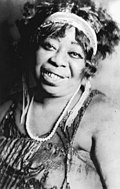
Ma Rainey (Gertrude Pridgett) (1886 – 1939)
Called the “Mother of the Blues,” Gertrude “Ma” Rainey was the first great professional blues singer and the woman who gave shape and form to the genre before it was ever committed to vinyl. Born in Columbus, Georgia, she was performing in traveling tent shows by age 14, and by the time she made her first recordings for Paramount in 1923, she was already a seasoned, commanding artist with a huge following across the South. Her recordings — gruff, earthy, and utterly assured — cover everything from traditional folk blues to explicitly queer themes, making her an important cultural figure far ahead of her time. She was a mentor to Bessie Smith and influenced every female blues singer who came after her.
Bessie Smith (1894 – 1937)
The “Empress of the Blues,” Bessie Smith was the greatest and most commercially successful blues singer of the 1920s, a towering artist whose rich contralto voice and dramatic delivery made her the biggest African American recording star of her era. Born in Chattanooga, Tennessee, she joined Ma Rainey’s touring company as a teenager and learned from the master before forging her own path. Her Columbia Records sessions — including her recording of W.C. Handy’s “St. Louis Blues” with Louis Armstrong — are among the finest American recordings ever made, combining blues feeling with jazz sophistication. Smith died in a car accident in Mississippi in 1937; a headstone was placed on her grave decades later, purchased jointly by singer Juanita Green and rock star Janis Joplin.
Ethel Waters (1896 – 1977)
A transitional figure who bridged blues, jazz, and Broadway, Ethel Waters was one of the most versatile and accomplished entertainers of the twentieth century, beginning her career as a blues singer and evolving into a celebrated actress and gospel performer. She recorded with some of the greatest jazz musicians of the era — Fletcher Henderson, Duke Ellington, and Benny Goodman — and her recordings of “Stormy Weather” and “Am I Blue?” remain jazz-blues classics. Waters was among the first African American performers to cross over to mainstream white audiences, appearing on Broadway and in Hollywood films, and her dignified presence helped pave the way for later generations of Black artists. She was nominated for an Academy Award for her performance in Pinky (1949).
Victoria Spivey (1906 – 1976)
A blues singer, songwriter, pianist, and entrepreneur from Houston, Texas, Victoria Spivey had her first recording hit at just 21 years old with “Black Snake Blues,” and went on to record prolifically for OKeh, Vocalion, and other labels throughout the 1920s and 1930s. Known for her dark, witty, and often frankly ribald lyric sensibility, she brought a bluesy sophistication to her recordings that earned her a devoted following among both Black and white audiences. Later in life, she founded Spivey Records, one of the first artist-owned blues labels, and used it to record surviving blues legends and discover new talent — her artists included a young Bob Dylan, who played harmonica on several sessions. Spivey remained active as a performer and advocate for blues history until her death.
Section IV: Piedmont Blues
From the Carolinas to Virginia and Georgia, the Piedmont Blues developed a lighter, finger-picked ragtime-influenced style that stood in contrast to the rawness of Delta blues — melodic, rhythmically intricate, and deeply rooted in the dance traditions of the Southeast. These artists brought an elegance and technical sophistication to the blues that continues to inspire guitarists worldwide.
Blind Blake (Arthur Phelps) (c. 1896 – c. 1934)
The undisputed king of Piedmont ragtime-blues guitar, Blind Blake was a Paramount Records recording star in the late 1920s whose fluid, two-finger picking style created a piano-like bass-and-treble independence that left musicians baffled for generations. Little is definitively known about his biography — even his birth name and death date remain disputed — but his recordings, more than 80 sides made between 1926 and 1932, are masterclasses in rhythmic sophistication and melodic invention. Songs like “Police Dog Blues,” “West Coast Blues,” and “Diddie Wa Diddie” reveal an artist of supreme technical command who never sacrificed feeling for flash. Blake’s guitar work remains a benchmark for fingerstyle blues players worldwide.
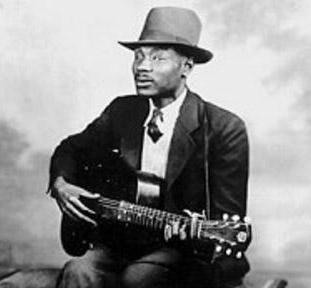
Blind Boy Fuller (Fulton Allen) (1907 – 1941)
The most commercially successful Piedmont blues artist of the 1930s, Blind Boy Fuller was a Durham, North Carolina street musician whose recordings for ARC captured the full vitality of the Southeast blues tradition — bottle-neck slide, ragtime picking, and playfully suggestive hokum all rolled into one. Discovered by local promoter and talent scout J.B. Long, Fuller recorded over 120 sides before his death at 33, including the enduring “Step It Up and Go” and “Truckin’ My Blues Away.” His partnership with harmonica player Sonny Terry produced some of the era’s most joyous recordings, and both artists influenced generations of East Coast blues players. Despite his short life, Fuller’s recordings remain a touchstone of the Piedmont style.
Mississippi John Hurt (1892 – 1966)
One of the most beloved figures in American folk-blues, Mississippi John Hurt was a sharecropper from Avalon, Mississippi, whose 1928 recordings for OKeh revealed a gentle, introspective artist whose fingerpicking style bore little resemblance to the raw Delta blues recorded by his contemporaries. After those early sessions, Hurt returned to farming and near-total obscurity for 35 years — until music researcher Tom Hoskins tracked him down in Avalon in 1963 and brought him to the Newport Folk Festival. The rediscovery launched a late-career renaissance: Hurt performed and recorded prolifically until his death in 1966, enchanting folk revival audiences with his warm voice, impeccable guitar work, and gentle humor. His “Frankie and Albert,” “Spike Driver Blues,” and “Make Me a Pallet on Your Floor” became folk revival anthems.
Rev. Gary Davis (1896 – 1972)
A blind street evangelist, Reverend Gary Davis was one of the most technically gifted guitarists of the twentieth century — a master of ragtime, gospel, blues, and folk whose picking style influenced a generation of 1960s guitarists including David Bromberg, Stefan Grossman, and Bob Weir of the Grateful Dead. Born in South Carolina and ordained as a Baptist minister, Davis performed primarily as a religious musician but possessed a blues vocabulary of breathtaking depth, evident in recordings like “Candy Man Blues” and “Cocaine Blues” from his early career. He settled in New York in the 1940s and became a fixture of the Greenwich Village folk scene, passing his techniques to dozens of students through direct mentorship. His recordings and teachings remain a living curriculum for acoustic guitar players around the world.