
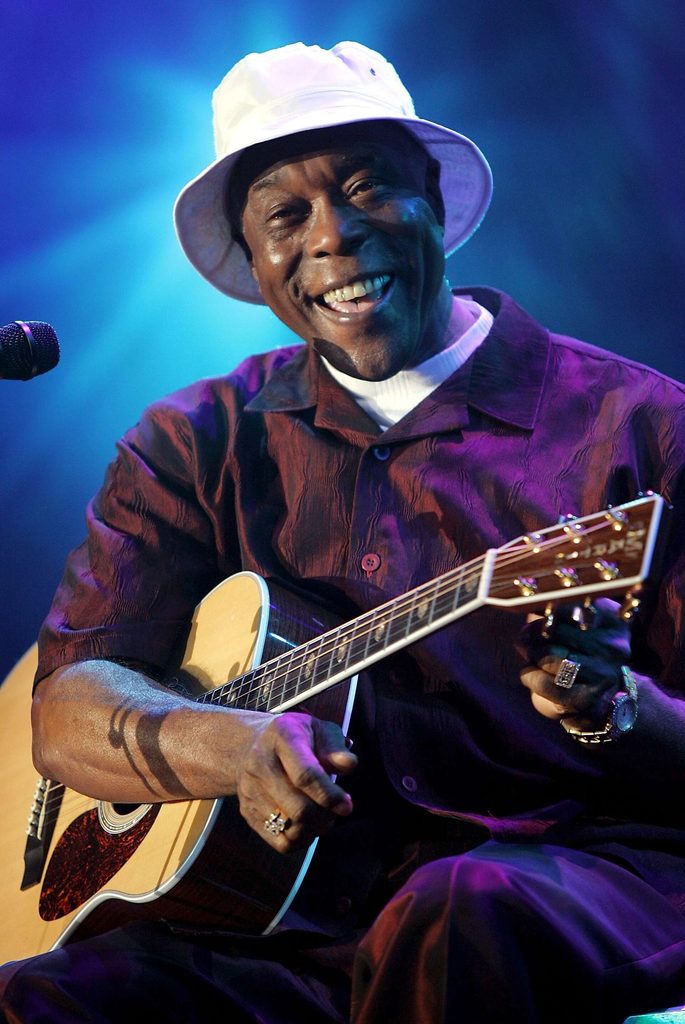
Buddy Guy (George “Buddy” Guy, b.1936) is one of the most electrifying guitarists in American music history and a towering figure in Chicago blues. Known for his explosive solos, fearless improvisation, and magnetic stage presence, Guy helped define the modern electric blues sound and influenced generations of rock and blues musicians. His work with Junior Wells, Muddy Waters, and countless Chicago legends places him firmly among the most important blues artists of the 20th and 21st centuries.
Learn More: Buddy Guy – Wikipedia
Early Life & Musical Beginnings
Born George Guy in Lettsworth, Louisiana, Buddy grew up surrounded by the rural blues traditions of the South. He built his first guitar from scrap wood and wire, developing a raw, emotional playing style rooted in Delta blues. In 1957, 20-year-old Guy moved to Chicago, where he quickly became a standout talent in the city’s competitive club scene. His fiery guitar work caught the attention of Muddy Waters, who helped introduce him to the broader Chicago blues community.
Rise to Prominence
Wells’ breakthrough came with his 1953 hit “Hoodoo Man Blues,” recorded with guitarist Buddy Guy. The Buddy Guy’s breakthrough came through his work with Chess Records, where he recorded as a session guitarist for artists including:
| Buddy Guy performing in 2008 | |
|---|---|
.jpg) | |
| Background information | |
| Born | George Guy July 30, 1936 (age 89) Lettsworth, Louisiana, U.S. |
| Genres | Chicago bluesblueselectric bluesblues rock |
| Occupations | Musician singer songwriter |
| Instruments | Guitar vocals |
| Years active | 1953–present |
| Labels | RCA, Cobra, Chess, Delmark, Silvertone, MCA,, Atlantic, MPS, Charly, Zomba Group, Vanguard JSP, Rhino, Purple Pyramid, Flyrig, “AIM, Alligator Records Blues Ball |
| Spouse(s) | Joan Guy (m. 1959), Jennifer Guy (1975-2002) |
| Website | buddyguy |
- Muddy Waters
- Howlin’ Wolf
- Little Walter
- Koko Taylor
His own recordings for labels such as Chess, Delmark, and Vanguard showcased a bold, high‑energy style that blended traditional blues with the emerging sounds of soul and rock.
Guy’s partnership with Junior Wells became legendary. Together they recorded classics such as:
- Hoodoo Man Blues (1965)
- It’s My Life, Baby! (1966)
- Play the Blues (1972)
Together, Junior Wells and Buddy Guy formed one of the most electrifying partnerships in Chicago blues, blending Wells’ sharp, soulful harmonica and vocals with Guy’s fearless, high‑voltage guitar work. Their collaborations — from club stages on the South Side to landmark recordings like Hoodoo Man Blues — captured the raw energy, spontaneity, and innovation that defined the city’s postwar blues sound. As a duo, they pushed boundaries, inspired generations of musicians, and helped carry Chicago blues onto the global stage.
Style & Influence
Buddy Guy’s playing is instantly recognizable: wild bends, sharp staccato bursts, sudden dynamic shifts, and fearless experimentation. His style blends:
- Chicago electric blues
- Delta roots
- Soul and R&B phrasing
- Rock‑level intensity
Guy’s influence reaches far beyond the blues world. Major artists who cite him as a key inspiration include:
- Jimi Hendrix
- Eric Clapton
- Stevie Ray Vaughan
- Jeff Beck
- The Rolling Stones
Guy’s live performances are legendary — unpredictable, emotional, and deeply engaging.
Later Career & Legacy
Buddy Guy continued to evolve across the decades, earning multiple Grammy Awards, a National Medal of Arts, a Kennedy Center Honor, and induction into the Rock & Roll Hall of Fame.
His Chicago club, Buddy Guy’s Legends, remains a cornerstone of the city’s blues community and a vital venue for emerging and established artists. Even into his later years, Guy continues to tour, record, and mentor younger musicians, ensuring the Chicago blues tradition remains vibrant.
Essential Listening
- Hoodoo Man Blues (with Junior Wells, 1965)
- A Man and the Blues (1968)
- Stone Crazy! (1981)
- Damn Right, I’ve Got the Blues (1991)
- Born to Play Guitar (2015)
Why Buddy Guy Matters
Buddy Guy is a bridge between the classic Chicago blues master’s and the modern blues‑rock era. His fearless guitar work, passionate vocals, and decades of mentorship have shaped the sound of contemporary blues. For fans and musicians alike, Buddy Guy represents the living heartbeat of Chicago blues.