
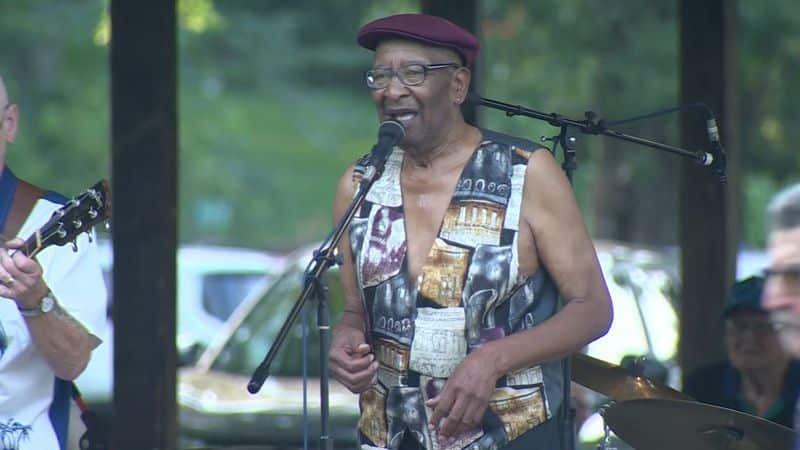
2023: James on Max Ink Radio Show
2025: Fox47 Artist Profile
Madison blues legend who came to Madison from Mississippi in the late 1960s and lived above the famous blues venue The Nitty Gritty where he met Luther Allison.
The two became fast friends with Tate becoming Luther’s soundtech for many years. They also were great fishing buddies and fished together in nearly everywhere around the world where Luther Allison toured.
Landing back in Madison, Tate formed the Million Dollar Band and started a many decades long history of hosting Tate’s open jam at clubs like O’Cayz Corral, Knuckledowns and the Red Rooster and now Thursdays at Bernells.
Blues Vocalist • Band Leader • Wisconsin Blues Hall of Fame Inductee
Few voices in Wisconsin blues carry the weight, warmth, and lived truth of James Earl Tate. At 77, Tate stands as one of the region’s most cherished blues storytellers—an artist whose life journey is inseparable from the music he sings. His declaration, “I am the blues,” is no boast; it is a simple, resonant fact shaped by decades of hard work, resilience, and devotion to the craft.
Roots in Mississippi
Born and raised on a Mississippi cotton farm, Tate spent his childhood working long days “from sun up to sun down,” a physically demanding life that forged both his character and his connection to the blues. The labor left lasting effects—he still attributes chronic back pain to those early years—but it also gave him the emotional vocabulary that would later define his voice.
Finding Home in Madison
In the late 1960s, Tate moved north to Wisconsin in search of new opportunity. Madison quickly became home, and fate placed him above the legendary Nitty Gritty, where he met blues icon Luther Allison. The two became fast friends—touring, fishing, and working side by side. Tate served as Allison’s sound tech for years, absorbing the discipline and spirit of professional blues performance.
A Leader in the Local Blues Scene
Stepping out from behind the soundboard, Tate formed the Million Dollar Band, launching a decades‑long presence on Madison stages. His open jams—first at O’Cayz Corral, later at Knuckledowns, the Red Rooster, and now Thursdays at Bernell’s—became a cornerstone of the city’s blues community. These sessions nurtured countless musicians and kept the local scene vibrant, inclusive, and unmistakably Tate‑flavored.
He later founded Tate & the 008 Band, a group that carried his voice across clubs, festivals, and community stages throughout Wisconsin. Whether fronting a band or hosting a jam, Tate’s presence radiates joy, grit, and authenticity.
Resilience & Renewal
Tate’s journey has not been without hardship. A decade ago, he collapsed at home and was rushed to the hospital, where doctors discovered fluid around his heart and an irregular heartbeat—signs of heart failure. Guided by SSM Health’s cardiac rehab team in Janesville, Tate committed to a disciplined recovery program he still attends three times a week. The lifestyle changes strengthened his heart and renewed his energy for performing.
Supported by his partner Janine Peterson, Tate continues to inspire audiences with a voice that carries both the weight of his past and the joy of his present.
A Wisconsin Blues Hall of Famer
In 2024, Tate’s decades of contribution to Wisconsin blues were formally honored with his induction into the Wisconsin Blues Hall of Fame—a milestone recognizing not only his artistry, but his leadership, mentorship, and unwavering dedication to the community he helped shape.
The Blues, Fully Lived
Today, James Earl Tate remains a vibrant force in Madison’s blues landscape. His performances are rich with soul, humor, and lived experience. When he sings, audiences feel the truth of a man who has carried the blues from Mississippi fields to Wisconsin stages—and continues to share that gift with gratitude.
“I’m happy,” he says. And when his voice rises, the room believes him.
James Earl Tate is one of Wisconsin’s most beloved blues voices—a singer whose life story is woven directly into the music he performs. At 77, Tate embodies the blues with a depth earned through hard work, perseverance, and a lifetime of turning struggle into song. “Everyone wants to know why I sing the blues and I always go, ‘I am the blues,’” he says, a statement that reflects both his history and his artistry.
Born and raised on a cotton farm in Mississippi, Tate spent his childhood working long days in the fields, a physically demanding life that shaped both his character and his perspective. The back‑breaking labor left lasting effects—he still attributes his chronic back pain to those early years—but it also gave him the emotional vocabulary that would later define his music.
In the late 1960s, seeking opportunity and a new start, Tate moved north to Wisconsin, a place he quickly embraced as home. His entry into the Madison music scene came through a chance meeting with legendary bluesman Luther Allison at the Nitty Gritty. Tate began working as a roadie for Allison, absorbing the rhythms, discipline, and spirit of professional blues performance. Before long, he stepped onto the stage himself, forming Tate and the 008 Band, the group that would carry his voice across clubs, festivals, and community stages throughout the region.
His contributions to Wisconsin’s blues heritage were formally recognized in 2024, when he was inducted into the Wisconsin Blues Hall of Fame, a milestone that affirmed his decades of dedication to the craft.
Tate’s journey, however, has not been without hardship. About ten years ago, he collapsed while preparing to mow his lawn and was rushed to the hospital, where doctors discovered fluid around his heart and an irregular heartbeat—signs of heart failure. Instead of surgery, his medical team at SSM Health in Janesville guided him through cardiac rehab, a program he continues faithfully three times a week. The lifestyle changes—exercise, diet, and discipline—have strengthened his heart and renewed his energy for performing.
Supported by his partner, Janine Peterson, and embraced by fans across Wisconsin, James Earl Tate remains a vibrant, inspiring figure. His voice carries the weight of his past, the resilience of his recovery, and the joy of a life still full of music. “I’m happy,” he says—and when he sings, audiences feel it.