
Blues Directory: Early Blues Pioneers
Madison Blues Society honors women and men, past and present, whose self-expression of poem, phrase tell a story of their own hopes and hurts with unparalleled authentic intensity. Through these pages, we highlight their contributions and how these everyday people move our hearts and enrich our world with their talent, energy and lyrical genius. We strive to share the history and influences of blues music as it evolved prior to the turn of the century to its current incarnation. In a small way we wish to hope to add to the current body of knowledge by reflecting on blues musicians of the past and today.
These artists shaped the very foundations of the blues form — composing, codifying, and spreading the music before recording technology existed, or in its earliest days. Without their vision and determination to bring the blues to a wider world, the entire tradition might have remained confined to the communities that created it.
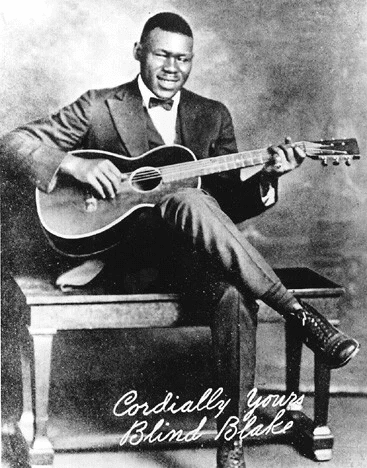
Blind Blake (Arthur Blake, c. 1896–1934)
Blind Blake (Arthur Blake, c. 1896–1934) was one of the most technically gifted guitarists of early American blues. Known as the “King of Ragtime Guitar,” he blended blues with ragtime‑style fingerpicking, creating intricate, syncopated guitar lines that influenced generations of acoustic players. Despite his prolific recording career, much of his life remains mysterious, adding to his legendary status.
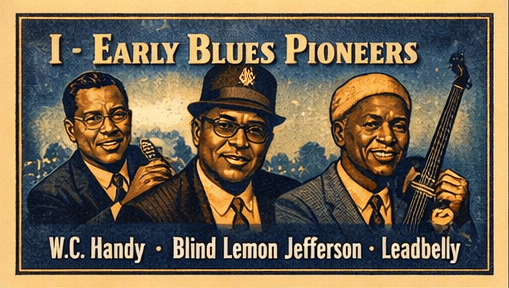
W.C. Handy (1873 – 1958)
Known as the “Father of the Blues,” William Christopher Handy was a cornet player, composer, and music publisher from Florence, Alabama who was among the first to notate and publish blues compositions, bringing the form to mainstream American audiences. His landmark songs “Memphis Blues” (1912) and “St. Louis Blues” (1914) became instant standards and launched a national craze for blues-influenced popular music. In 1908, he co-founded one of the first African American–owned music publishing houses, ensuring blues artists had an economic foothold in the industry. Handy’s genius was synthesizing the raw folk music he heard traveling through the South into polished, publishable form without stripping away its soul.
Blind Lemon Jefferson (1897 – 1929)
Blind Lemon Jefferson (pdf)
Blind Lemon Jefferson (1897–1929) was the first major star of country blues. Blind from birth, he traveled widely as a street musician before becoming a best‑selling recording artist. His distinctive guitar style and high‑pitched vocals shaped Texas blues and influenced countless musicians.
The first major recording star of the country blues, Blind Lemon Jefferson emerged from the piney woods of East Texas with a nasal, deeply expressive voice and a guitar style so original it defied easy categorization. Born blind near Coutchman, Texas, he was performing on street corners and at country dances by his early teens and arrived in Dallas’s Deep Ellum district, where he became a sensation. His 1926 recordings for Paramount were landmark releases — raw, rhythmically complex, and deeply personal — and he quickly became one of the best-selling blues artists of the acoustic era. Jefferson’s influence stretches from T-Bone Walker, who once led him through Dallas streets, to Lead Belly, Lightnin’ Hopkins, and B.B. King.
Leadbelly (Huddie Ledbetter) (1888 – 1949)
One of the most towering figures of American roots music, Huddie Ledbetter — known universally as Leadbelly — possessed a powerful twelve-string guitar sound and a repertoire that spanned blues, work songs, spirituals, and folk. Born in Louisiana and raised in Texas, he lived a turbulent life that included two prison terms, during which folklorists John and Alan Lomax discovered him and brought his music to the wider world. His songs — including “Goodnight, Irene,” “Midnight special,” and “Bourgeois Blues” — became cornerstones of American folk and blues tradition. Leadbelly’s recordings for the Library of Congress remain among the most important documents in American music history.
Mamie Smith (1883–1946)
Mamie Smith (1883–1946), the “Queen of the Blues,” was a vaudeville performer and pioneering recording artist. Her 1920 hit Crazy Blues became the first successful blues recording by an African American singer, opening the door for the race records industry and transforming American music.
Gertrude “Ma” Rainey (1886–1939)
Gertrude “Ma” Rainey (1886–1939), the “Mother of the Blues,” was one of the earliest and most influential classic blues singers. Her powerful stage presence and recordings helped define the vaudeville blues tradition and directly influenced younger artists, including Bessie Smith.
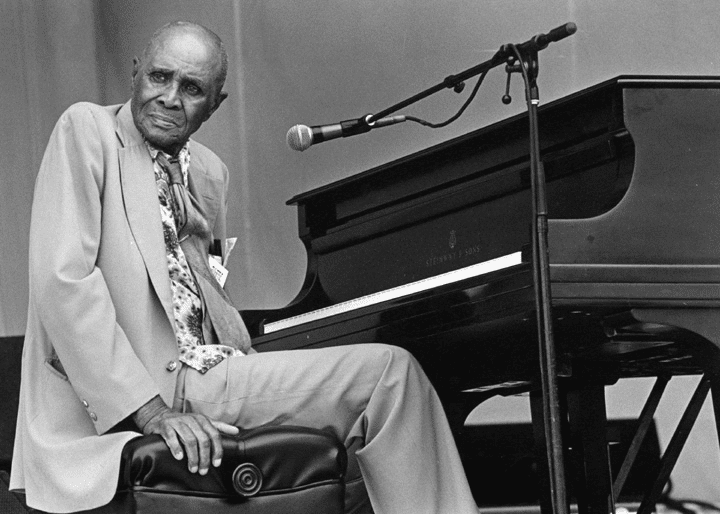
Albert “Sunnyland Slim” Luandrew (1907–1995)
Albert “Sunnyland Slim” Luandrew (1907–1995) was a towering figure in Chicago blues. A pianist, singer, and bandleader, he mentored Muddy Waters and Little Walter and recorded more than 250 songs. His eight‑decade career made him a central architect of postwar electric blues, even though he never achieved the commercial fame of his protégés.
Bessie Smith (1894–1937)
Bessie Smith (1894–1937), the “Empress of the Blues,” was the most popular and influential blues singer of the 1920s and 1930s. Her commanding voice and emotional depth made her a star of the classic blues era, and her recordings remain essential to American musical history.
Pinkney “Pink” Anderson (1900–1974)
Pinkney “Pink” Anderson (1900–1974) was a Piedmont blues guitarist and entertainer whose career began in traveling medicine shows. His light, ragtime‑inflected guitar style and versatile performances — singing, dancing, comedy — made him a fixture of early 20th‑century Southern entertainment. His name famously inspired the band, Pink Floyd.