
Overview
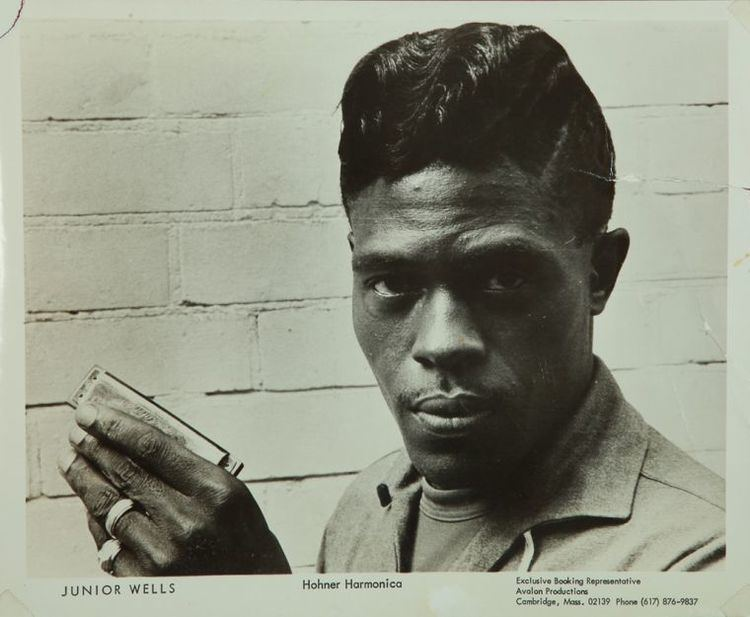
Junior Wells stands as one of the defining voices and harmonica stylists of Chicago blues. Known for his fiery stage presence, sharp rhythmic phrasing, and unmistakable vocal grit, Wells helped shape the electric blues sound that would influence generations of musicians across blues, rock, soul, and funk. His collaborations with Muddy Waters, Buddy Guy, and countless Chicago greats cemented him as a central figure in the postwar blues movement.
Learn More: Junior Wells – Wikipedia
Early Life & Musical Beginnings
Born Amos Blakemore in Memphis, Tennessee, Wells moved to Chicago as a young teenager—right into the heart of the city’s booming blues scene. He quickly absorbed the electric blues innovations happening around him and gravitated toward the harmonica, developing a punchy, expressive style that blended the rawness of Delta blues with the amplified swagger of Chicago’s clubs.
By age 18, Wells had already replaced Little Walter in Muddy Waters’ band—an extraordinary testament to his talent and reputation.
Rise to Prominence
Wells’ breakthrough came with his 1953 hit “Hoodoo Man Blues,” recorded with guitarist Buddy Guy. The album is widely considered one of the greatest Chicago blues records ever made—loose, soulful, and electrifying. It captured the feel of a real club performance and became a blueprint for modern electric blues.
Throughout the 1950s–70s, Wells recorded for labels including Chief, Delmark, and Vanguard, producing classics such as:
| Junior Wells in Chicago, Illinois, c. 1984 | |
|---|---|
 | |
| Background information | |
| Born | Amos Wells Blakemore Jr. December 9, 1934 West Memphis, Arkansas, U.S. |
| Died | January 15, 1998 (aged 63) Chicago, Illinois, U.S. |
| Genres | BluesChicago bluesrhythm and blues[1][2] |
| Occupations | Musiciansongwriter |
| Instruments | Vocalsharmonica |
| Years active | 1950s–1997 |
| Labels | StatesUSAChiefDelmark |
- “Messin’ with the Kid”
- “Little by Little”
- “Come On in This House”
- “It Hurts Me Too”
His harmonica tone—bright, biting, and rhythmically tight—became instantly recognizable.
Style & Influence
Junior Wells’ artistry blended:
- Chicago electric blues grit
- Soul and R&B phrasing
- Funk‑infused rhythms
- Charismatic, playful stage energy
He was a natural showman, often dancing, joking, and interacting with audiences while delivering powerhouse vocals. His partnership with Buddy Guy became legendary; together they toured internationally and brought Chicago blues to new audiences around the world. Wells’ influence can be heard in artists such as:
- Buddy Guy
- Magic Sam
- James Cotton
- Charlie Musselwhite
- The Rolling Stones (who covered his material and invited him onstage)
Later Career & Legacy
Wells continued performing and recording into the 1990s, collaborating with Bonnie Raitt, Carlos Santana, Van Morrison, and others. His final years included appearances at major festivals and renewed recognition as one of the last living architects of classic Chicago blues.
Junior Wells passed away in 1998, but his legacy remains foundational. His recordings are essential listening for anyone exploring Chicago blues, and his influence continues to echo through modern blues, rock, and roots music.
Essential Listening
- Hoodoo Man Blues (1965)
- It’s My Life, Baby! (1966)
- On Tap (1974)
- Come On in This House (1996)
Why Junior Wells Matters
Junior Wells embodied the spirit of Chicago blues—innovative, bold, and deeply expressive. His harmonica work, vocal power, and magnetic stage presence helped define an era and inspired countless musicians. For blues fans, his catalog is a masterclass in electric blues history.