
Blues Directory: Boogie-Woogie & Piano Blues
Long before rock and roll existed, boogie-woogie pianists were shaking dance floors with rolling left-hand bass lines and syncopated right-hand figures that made entire rooms move. These keyboard masters were some of the most joyfully irresistible performers in American music. Moreover, their influence on every piano-driven popular style that followed cannot be overstated.
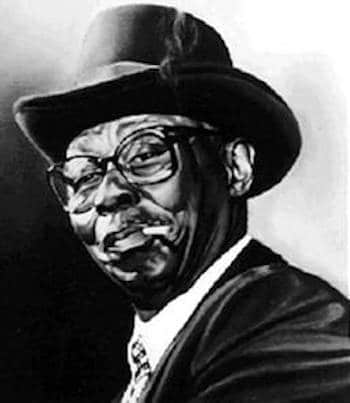
Pine Top Smith (Clarence Smith) (1904 – 1929)
The man credited with coining the term “boogie-woogie” and recording the first boogie-woogie piano piece, Pine Top Smith was a Birmingham, Alabama native. He made his mark in the turbulent world of rent parties and house dances in Chicago’s South Side. His 1928 recording “Pine Top’s Boogie Woogie” for Vocalion Records was a sensation. Smith made a rollicking, instructional party record in which he called out dance moves over his driving piano. As a result, it launched a craze that would explode into mainstream popularity a decade later. Tragically, Smith was shot and killed at age 24 in a dance hall altercation, just as his star was rising. His influence on every boogie-woogie pianist who followed — and on rock and roll piano itself — is incalculable.
Meade Lux Lewis (1905 – 1964)
Meade “Lux” Lewis (1905–1964) contributed significantly to popularizing Boogie Woogie. His signature piece, Honky Tonk Train Blues, became a classic and showcases his intricate right-hand melodies paired with rolling left-hand bass lines. Lewis was known for his expressive, rhythmic playing. Additionally, he later toured internationally.
A Chicago native who became one of the three great masters of boogie-woogie alongside Albert Ammons and Pete Johnson, Meade “Lux” Lewis was a supremely gifted pianist. His recording of “Honky Tonk Train Blues” — made in 1927 — was rediscovered in 1935 and triggered a nationwide boogie-woogie revival. His performances at Carnegie Hall’s famous 1938 “From Spirituals to Swing” concert introduced boogie-woogie to mainstream American audiences. This launched a craze that would dominate popular music well into the 1940s. Lewis possessed an almost classical technique married to deep blues feeling. In addition, his recordings remain some of the most joyously kinetic piano music ever captured. He continued performing until his death in a California automobile accident.
Albert Ammons (1907 – 1949)
Albert Ammons was a key figure in the Chicago Boogie Woogie scene. He was renowned for his energetic left-hand bass patterns and virtuosic improvisation. Ammons played extensively in clubs and became widely known through recordings and the historic 1938 “From Spirituals to Swing” concerts at Carnegie Hall.
One of the triumvirates of boogie-woogie masters who ignited a national craze after their 1938 Carnegie Hall performances, Albert Ammons was a Chicago pianist of irresistible swing and technical brilliance. His rolling bass lines and right-hand figures created a percussive, locomotive energy that made dancing virtually compulsory. Ammons was born on the South Side and played Chicago clubs and rent parties before his Carnegie Hall debut. That performance propelled him to national fame. This led to residencies at New York’s Café Society — the first racially integrated nightclub in Manhattan.
His recordings of “Boogie Woogie Stomp” and “Bass Goin’ Crazy” are foundational documents of the style. His son, Gene Ammons, became a celebrated jazz saxophonist and continued the family’s musical legacy.
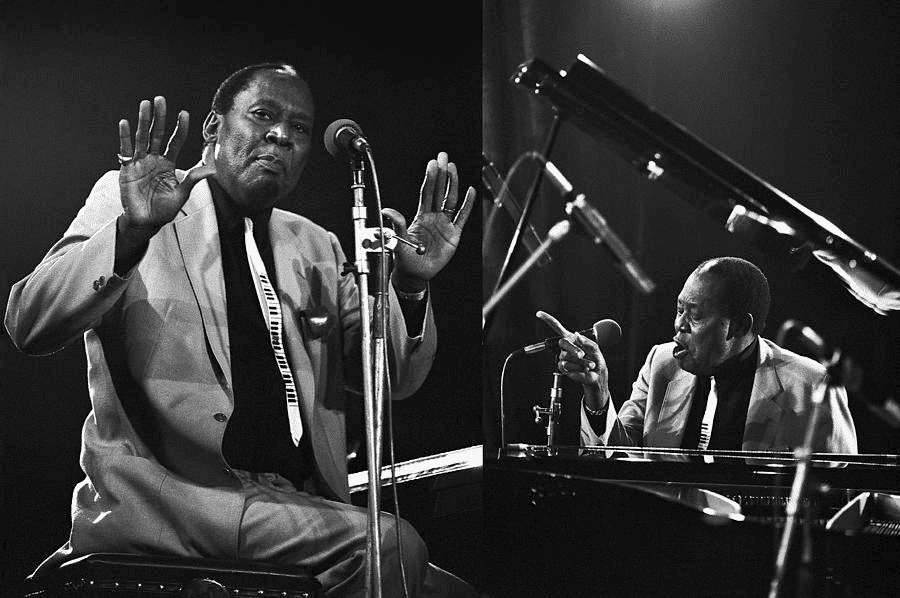
Memphis Slim (John Chatman) (1915 – 1988)
Born in Memphis and polished in Chicago, Memphis Slim was a pianist of uncommon elegance. He brought sophistication, wit, and blues authenticity to his recordings in equal measure and became one of the most beloved blues performers of the postwar era. He worked with Big Bill Broonzy and recorded prolifically under his own name from the early 1940s onward. His “Every Day I Have the Blues” became one of the most recorded songs in blues history. Unlike many of his peers, Slim found a particularly enthusiastic reception in Europe during the 1960s folk-blues boom. Chatman ultimately relocated to Paris, where he was celebrated as an elder statesman of American music. He remained a tireless ambassador for the blues until his death. He performed, recorded, and educated audiences across the globe.
Boogie-Woogie & Piano Blues Described
Boogie Woogie is a lively, rhythmically driven piano style characterized by a repeated rolling left-hand bass pattern and improvisational right-hand melodies.
Boogie Woogie originated in the African American communities of the Southern United States in the late 19th and early 20th centuries. It became popular in the 1920s and 1930s, particularly in Chicago and New York. This style is known for its upbeat, swinging rhythm that bridges blues, jazz, and early rock ‘n’ roll influences. Legendary pianists like Meade “Lux” Lewis, Albert Ammons, and Pete Johnson played a significant role in popularizing the style. Boogie Woogie influenced later music genres, including rock and roll, R&B, and jazz.
Boogie Woogie piano playing is ultimately about combining a driving, repetitive left-hand groove with a creative, playful, and improvisational right-hand melody. This makes it a fun and energetic style that bridges traditional blues and jazz with modern piano techniques.
Key Characteristics
- Left-Hand Patterns: The hallmark of Boogie Woogie is the left hand playing an ostinato (repeated) bass figure. Common patterns include:
- Eight-to-the-bar bass: Each beat or subdivision emphasizes a rolling or walking bass line, often using the I–IV–V blues chord progression.
- Alternating or walking bass lines that create a strong, driving rhythmic foundation.
- Right-Hand Techniques: The right hand typically plays:
- Syncopated melodies: Improvised licks that emphasize off-beats or swing rhythms.
- Bluesy riffs and runs: Often based on the pentatonic or blues scales.
- Call-and-response patterns with the left hand, creating a dynamic interplay.
- Rhythm and Groove: Boogie Woogie has a strong, danceable rhythm that emphasizes swing, syncopation, and energy. Maintaining a steady pulse with the left hand while improvising freely with the right hand is a central skill.
- Improvisation: Right-hand improvisation is key, allowing for expressive variations, glissandos, and decorative figures to energize the performance.
Techniques for Beginners
- Start by learning simple left-hand patterns in C, F, and G blues chords, practicing “eight-to-the-bar” consistently.
- Practice right-hand riffs separately using the C blues scale (C, E♭, F, G, B♭).
- Combine hands slowly, maintaining a steady left-hand rhythm while experimenting with right-hand variations.
- Gradually increase tempo and swing feel as coordination improves.
Learning and Resources
- Listen to classic recordings by Meade “Lux” Lewis, Albert Ammons, and Pinetop Smith to internalize Boogie Woogie style.
- Online tutorials, sheet music, and instructional books can guide specific left-hand patterns, right-hand improvisation, and blues phrasing.
- Practicing with a metronome helps solidify the characteristic swing rhythm.
Legacy
Boogie Woogie pianists are celebrated for their driving, percussive left-hand patterns, energetic improvisation, and ability to blend blues with jazz phrasing. The Chicago and Harlem scenes of the 1930s and 1940s were particularly significant in developing and popularizing Boogie Woogie. As a result, they influenced rhythm and blues, swing, and early rock and roll.