

Clarence “Pine Top” Smith was one of the earliest and most influential boogie‑woogie pianists — the musician who effectively named the genre, defined its rhythmic identity, and inspired nearly every major boogie‑woogie player who followed.
Clarence “Pine Top” Smith Born: June 11, 1904, Orion, Alabama Died: March 15, 1929, Chicago, Illinois Era: 1920s (Boogie‑Woogie / Piano Blues Pioneer)
Identity & Significance
Pine Top Smith is widely recognized as the first musician to record a full boogie‑woogie piano piece, making him a foundational figure in blues piano history. His 1928 recording “Pine Top’s Boogie Woogie” is the earliest known track to use the phrase “boogie‑woogie” in its title and lyrics, cementing the genre’s identity.
Musical Contributions
- “Pine Top’s Boogie Woogie” (1928)
- A landmark recording featuring spoken instructions (“right now!”) over driving piano bass lines.
- Established the eight‑to‑the‑bar left‑hand pattern that became the boogie‑woogie signature.
- Inspired generations of pianists including Meade Lux Lewis, Albert Ammons, and Pete Johnson.
- Blended blues, ragtime, and dance‑hall rhythms, creating a style that was both musically innovative and wildly popular in rent parties and clubs.
Early Life
Born June 11, 1904, in Pike County, Alabama, Pine Top grew up in the rural Wiregrass region. His nickname came from climbing trees as a child. His family moved to Birmingham during his teens, and by 1920 he relocated to Pittsburgh, where he worked as an entertainer and toured the T.O.B.A. vaudeville circuit.
During this period, he performed as a pianist, singer, comedian, and even worked as an accompanist for Ma Rainey and Butterbeans & Susie.
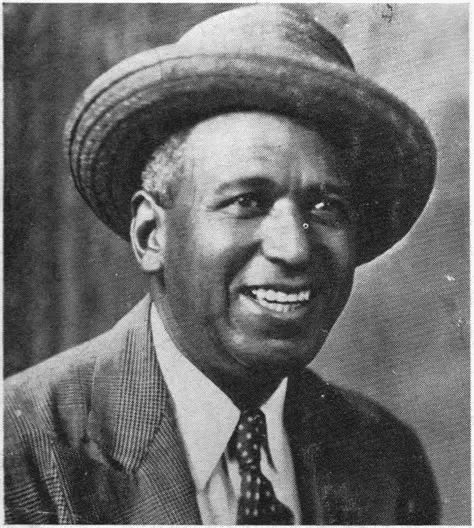
Breakthrough & Musical Significance
In the mid‑1920s, fellow pianist Cow Cow Davenport recommended him to producer J. Mayo Williams at Vocalion Records. Pine Top moved to Chicago in 1928 to record — sharing a rooming house at one point with Albert Ammons and Meade Lux Lewis, who would later become boogie‑woogie giants.
On December 29, 1928, he recorded:
- “Pine Top’s Boogie Woogie”
- The first known recording to use the term boogie‑woogie in its title.
- A foundational track featuring rhythmic breaks and spoken dance instructions.
- A direct foreshadowing of rock & roll phrasing and performance style.
- Lyrics like “the girl with the red dress on” and “shake that thing” became templates for later songs — including Ray Charles’ “Mess Around.”
This single recording cemented the name of the genre and established the left‑hand patterns that define boogie‑woogie piano.
Life & Career
- Raised in Alabama, later moved to Birmingham, then St. Louis, and ultimately Chicago, where the Boogie Woogie scene was exploding.
- Worked as a pianist, singer, and entertainer at rent parties and clubs.
- Recorded for Brunswick Records in 1928, producing the tracks that made him famous.
Death & Legacy
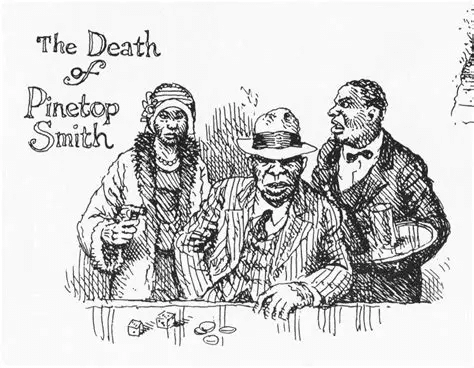
Pine Top was scheduled for another recording session in 1929, but on March 15, 1929, he was killed by a gunshot during a dance‑hall fight in Chicago — one day before the session. Sources differ on whether he was the intended target. He was only 24 years old.
In 2014, the Killer Blues Headstone Project placed a proper headstone for him at Restvale Cemetery in Alsip, Illinois.Tragically killed at age 24 by a stray bullet during a dance‑hall shooting in Chicago.
Despite his short life, his influence is enormous:
- His Boogie Woogie patterns became the template for the genre.
- His spoken‑word “instructions” over piano riffs shaped later blues and R&B performance styles.
- Modern boogie‑woogie pianists still cite him as a foundational figure.
Why He Matters in Blues History
Pine Top Smith is the bridge between early blues piano and the boogie‑woogie explosion of the 1930s–40s. Without him, the genre might not have had its name, its signature rhythmic identity, or its early commercial breakthrough.
Influence & Legacy
Pine Top’s influence is enormous:
- Acknowledged by Albert Ammons and Pete Johnson as a key inspiration.
- His boogie‑woogie style was arranged for big band by Tommy Dorsey in 1938, becoming Dorsey’s best‑selling record (over five million copies).
- Bing Crosby, Count Basie, and many others recorded versions of his work.
- Pianist Pinetop Perkins adopted his nickname after recording “Pinetop’s Boogie Woogie.”
- Ray Charles adapted Pine Top’s riffs and spoken‑style delivery for “Mess Around.”
He was posthumously inducted into the Alabama Jazz Hall of Fame in 1991.
78 rpm singles – Vocalion Records
| 1245 | “Pinetop’s Blues” | December 29, 1928 |
| 1245 | “Pinetop’s Boogie Woogie“[13] | December 29, 1928 |
| 1256 | “Big Boy They Can’t Do That”[13] | January 15, 1929 |
| 1256 | “Nobody Knows You When You’re Down and Out“[13] | January 15, 1929 |
| 1266 | “I’m Sober Now”[13] | January 14, 1929 |
| 1266 | “I Got More Sense Than That”[13] | January 14, 1929 |
| 1298 | “Jump Steady Blues”[13] | January 15, 1929 |
| 1298 | “Now I Ain’t Got Nothing At All”[13] | January 15, 1929 |