
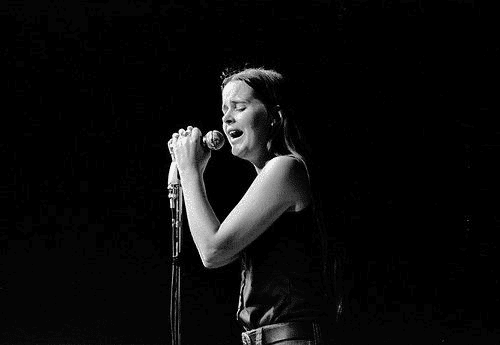
Tracy Nelson (born December 27, 1944) is an American singer, songwriter, and pianist celebrated for her emotive vocals spanning blues, R&B, country, and rock music.[1] With a career exceeding six decades, she first gained recognition in the 1960s as the lead singer of the pioneering country-rock band Mother Earth and has contributed to hundreds of recordings, including over 20 solo albums.[2][3] Her work has earned her three Grammy nominations, highlighting her enduring influence in roots music.[1]
Beginnings
Tracy’s story starts, as so many blues stories do, with a radio. Late at night in Madison, Wisconsin, a young girl presses her ear toward the speaker and catches the signal drifting up from Nashville’s WLAC — rhythm and blues floating through the dark across five hundred miles of Midwest air, landing in a bedroom on the isthmus, changing everything. That girl was Tracy Nelson, and what she heard on those nighttime broadcasts planted a root that has grown for sixty years and is still growing.
Nelson came up in Madison’s coffeehouses in the early 1960s, singing folk and blues with the Fuller’s Wood Singers and fronting a band called the Fabulous Imitations before anyone outside Wisconsin had a reason to know her name. In 1965 she released Deep Are the Roots on Prestige Records — a collection of acoustic blues standards recorded with harmonica player Charlie Musselwhite, raw and spare and completely assured. She was twenty years old. Her blues education continued in Chicago’s clubs, where she soaked up Muddy Waters, Howlin’ Wolf, and Otis Spann from the front row, learning by watching the master’s work.
Style Evolution
Born in Madison, Wisconsin, Nelson developed her musical interests early, performing folk and blues in local coffeehouses while studying social work at the University of Wisconsin.[3] As a child, Nelson’s passion for music was ignited by nighttime broadcasts of rhythm and blues from Nashville’s WLAC radio station, which reached her home in Madison despite the distance.[7] These late-night listens introduced her to influential R&B artists and laid the groundwork for her lifelong affinity for blues and soul genres.[6]
During her teenage years, Nelson began actively participating in local music scenes, singing folk music in coffeehouses and joining the Fuller’s Wood Singers, a community group that provided her early performance opportunities, and was lead singer in a band called The Fabulous Imitations.[7] This involvement marked her initial steps toward a professional path, eventually leading to formal education and deeper explorations in folk traditions.
Nelson released her debut album, Deep Are the Roots featuring harmonica player Charlie Musselwhite in 1965 (Prestige Records)., a collection of acoustic blues standards that showcased her raw talent. [4] Nelson’s influences deepened through immersion in the Chicago blues scene, where she learned from artists such as Muddy Waters, Howlin’ Wolf, and Otis Spann by attending their performances and studying their recordings.[11][12] Hands-on engagement with blues traditions shaped her vocal style and repertoire.
San Francisco Happened…
In her new West Coast community, Nelson formed the band Mother Earth in the late 1960s and walked straight into the beating heart of the psychedelic underground. There, she shared the Fillmore stage with the Grateful Dead, Jefferson Airplane, Janis Joplin, and Jimi Hendrix. At these collaborations, her gospel-scorched contralto cut through the organ swells and improvisational haze like something that had been there all along, waiting for the room to catch up. Living with the Animals (1968), featuring Mike Bloomfield on guitar, established the band’s credentials immediately. “Down So Low” became a signature that has followed her career for fifty years — a vocal performance of such naked emotional honesty that it never ages, never loses its grip.
Then there was Nashville
Nashville came next, and with it a country pivot that was no pivot at all — just another room in the same house. Mother Earth Presents Tracy Nelson Country (1969) was produced by Scotty Moore and Pete Drake and proved she could hold a Patsy Cline lyric with the same authority she brought to a Muddy Waters shuffle. A 1974 Grammy-nominated duet with Willie Nelson on “After the Fire Is Gone” confirmed what the music world was slowly figuring out: Tracy Nelson did not belong to any one genre. She belonged to American music, as the music belonged to her.
…and back to Blues
By the mid-1970s, Nelson shifted toward soul and R&B territories with Sweet Soul Music, issued in 1975 on MCA Records, which featured upbeat tracks and horn-driven arrangements that showcased her powerful, emotive delivery in a more polished, Motown-inspired style.[21] This album represented a significant stylistic evolution, emphasizing her adaptability and drawing on her earlier experiences with diverse musical ensembles to craft a soulful identity.[22] By 1993, Nelson reemerged on the music scene with the blues-R&B album In the Here and Now (1993) on Rounder Records, followed by appearances on programs like A Prairie Home Companion and Austin City Limits.[3]
By the early 2000s, Nelson returned to a rawer blues aesthetic with Live from Cell Block D, a 2004 live album recorded at a women’s prison and released on Memphis International Records, capturing her commanding stage presence through intimate performances of blues standards and originals. The recording underscored her enduring connection to blues roots, with the unconventional venue adding a layer of authenticity and emotional depth to her interpretations.
Building on this momentum, her 2007 release You’ll Never Be a Stranger at My Door on Memphis International Records delved into gospel-tinged blues, featuring a selection of traditional songs that blended spiritual fervor with country and blues undertones, highlighting her interpretive prowess and vocal warmth.[23] This album solidified her reputation for resurrecting overlooked material with personal conviction, reflecting a career arc toward more introspective and faith-infused expressions.[24] She continued this trajectory with Victim of the Blues in 2011 on Delta Groove Productions, a studio album of blues covers that further demonstrated her vocal depth and connection to the genre.[25]
Nelson’s ensuring decades gave her room to range. Soul, R&B, gospel-tinged Americana, blues-chamber fusion with Corky Siegel, and a remarkable 2004 live album recorded at a women’s prison in Nashville — Live from Cell Block D — that stripped everything back to the essentials and let her voice carry the weight alone. In 2023 she returned with Life Don’t Miss Nobody on BMG, a 13-track self-portrait featuring Willie Nelson, Marcia Ball, Irma Thomas, and Charlie Musselwhite, earning her third Grammy nomination at age seventy-nine. Her first album in twelve years, third Grammy nomination. Still reaching.
Collaborations
- 1974 duet single “After the Fire Is Gone” with Willie Nelson, released on Columbia Records, which earned a Grammy nomination for Best Country Performance by a Duo or Group with Vocal at the 17th Annual Grammy Awards.[50][51]
- In 1998, Nelson joined forces with Marcia Ball and Irma Thomas for the album Sing It!, issued by Rounder Records, blending their soulful styles in a collection of R&B and blues covers that received a Grammy nomination for Best Contemporary Blues Album at the 41st Annual Grammy Awards.[52]
- \Blues Broads, an all-female vocal group featuring Angela Strehli, Annie Sampson, and Dorothy Morrison; showcased Nelson’s harmonies in a roots-blues context. In 2012 Telarc International captured performances of blues standards and originals.
- Guest appearances with Corky Siegel’s Chamber Blues, and the 2022 album More Different Voices where she performed on tracks like “Down So Low.”[9][53]
- Blues compilations and reunion projects such as the 2005 Buried Alive in the Blues: Chicago Blues Reunion album.[5][26