
William Christopher Handy stands as one of the most pivotal figures in American music — not because he invented the blues, but because he recognized its power, preserved its structure, and carried it from Southern Street corners to the national stage. Born in Florence, Alabama, Handy grew up in a deeply musical environment shaped by church hymns, brass bands, and the folk traditions of Black Southerners. Trained formally as a cornet player, he developed a rare ability to bridge vernacular music with professional composition, a skill that would define his legacy.
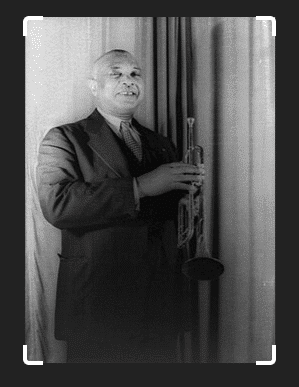
In the late 19th and early 20th centuries, Handy traveled extensively throughout the South as a musician, bandleader, and arranger. It was during these travels — especially in Mississippi, Alabama, and Tennessee — that he encountered the raw, emotionally charged folk blues performed by itinerant musicians. Handy later described hearing a guitarist in Tutwiler, Mississippi sliding a knife along the strings while singing with “the weirdest music I had ever heard.” Encounters like these reshaped his musical direction.
By the early 1900s, Handy had settled in Memphis, where he led the Memphis Orchestra and absorbed the city’s vibrant mix of ragtime, Black string‑band music, and emerging blues forms. In 1912, he published “Memphis Blues,” one of the first notated blues compositions. Two years later, he released “St. Louis Blues,” a masterpiece blending blues, tango rhythms, and sophisticated orchestration. The song became an international sensation, recorded by countless artists — including Bessie Smith with Louis Armstrong — and remains one of the most influential pieces in American music history.
Handy’s impact extended far beyond composition. In 1908, he co‑founded one of the first African American–owned music publishing houses, giving Black composers unprecedented access to the business side of music. His publications helped codify blues structure, making the form accessible to bandleaders, orchestras, and mainstream audiences. Through sheet music, performances, and tireless advocacy, Handy ensured that blues — a folk tradition born from Black Southern experience — became a recognized and respected American art form.
Performance History
W.C. Handy’s performance career spanned more than half a century and touched nearly every corner of the American South and Midwest. In his early years, Handy performed with brass bands, minstrel troupes, and dance orchestras, traveling through Mississippi, Alabama, Kentucky, and Georgia. These tours exposed him to the folk musicians whose styles would later shape his compositions.
During his Memphis years, Handy led the Memphis Orchestra, performing in Beale Street clubs, dance halls, civic events, and regional touring engagements. His band became one of the most sought‑after ensembles in the South, known for blending blues motifs with polished arrangements suitable for both Black and white audiences.
As his fame grew, Handy performed and conducted in St. Louis, Chicago, New York, and other major cities, often presenting blues in concert settings that elevated the genre’s status. In New York, where he later relocated, Handy continued performing, publishing, and promoting blues until blindness ended his active musical career.
Across all these stages — from rural Southern gatherings to grand northern theaters — Handy’s mission remained constant: to honor the folk roots of the blues while giving the music the professional platform it deserved. His work ensured that the blues would not remain a regional curiosity but become a foundational pillar of American culture.
🎼 Recordings & Compositions
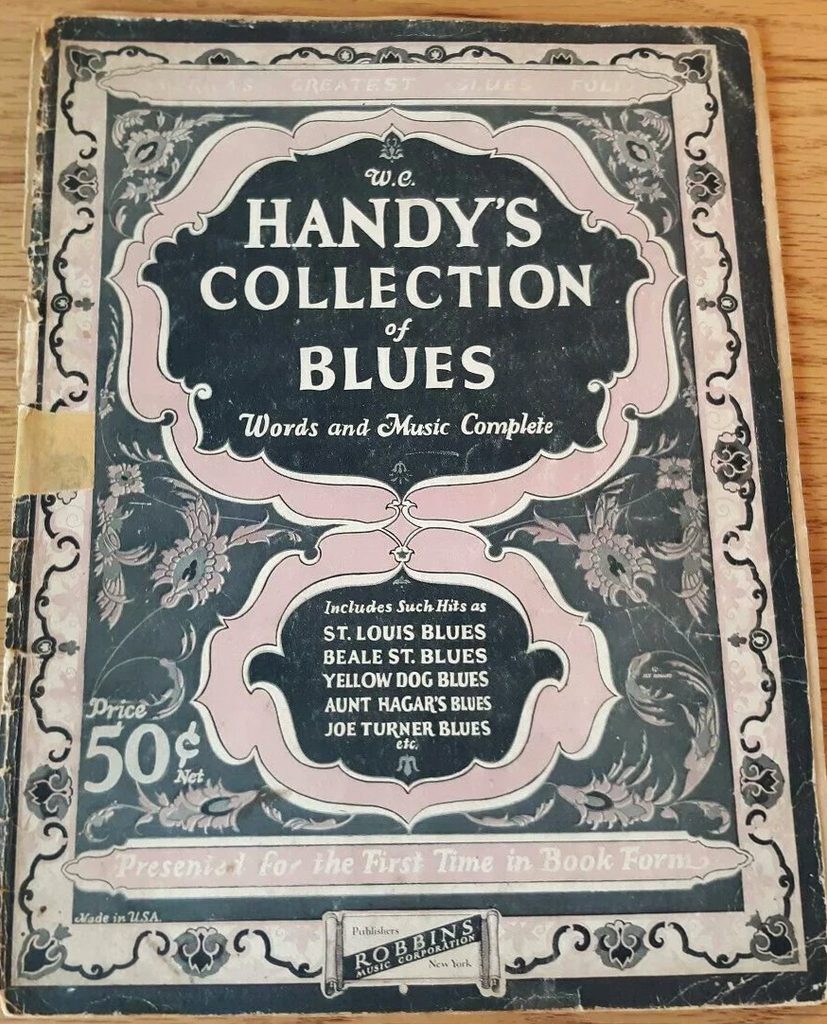
W.C. Handy’s legacy rests on a body of work that helped define and codify the blues as a formal musical genre. His compositions were among the first blues pieces ever published, allowing the music to reach audiences far beyond the South.
- “Memphis Blues” (1912) — One of the earliest published blues compositions, blending folk blues with dance‑band orchestration.
- “St. Louis Blues” (1914) — His most famous work, recorded by countless artists including Bessie Smith and Louis Armstrong. It became a global standard and remains one of the most influential songs in American history.
- “Beale Street Blues” (1916) — A tribute to Memphis’s vibrant musical district.
- “Yellow Dog Blues” (1914) — Based on folk verses Handy heard in Mississippi.
- “Aunt Hagar’s Blues” (1920) — A sophisticated blend of blues and jazz harmony.
Handy also published anthologies of spirituals, folk songs, and blues, including Blues: An Anthology (1926) and Negro Authors and Composers of the United States (1938). His work as a publisher ensured that Black composers had access to the business side of music at a time when opportunities were scarce.
🏅 Awards & Recognition
W.C. Handy’s contributions to American music earned him widespread recognition during his lifetime and enduring honors after his death.
- “Father of the Blues” — A title acknowledging his role in documenting, arranging, and popularizing blues music.
- Honorary doctorates from institutions including Tuskegee Institute and Howard University.
- W.C. Handy Park and Beale Street statue in Memphis commemorate his influence on the city’s musical identity.
- W.C. Handy Music Festival in Florence, Alabama celebrates his legacy annually.
- Inducted into the Nashville Songwriters Hall of Fame and honored by the Blues Foundation for his foundational contributions.
- His home in Florence, Alabama is preserved as the W.C. Handy Birthplace, Museum & Library.
Handy’s work ensured that blues — a folk tradition born from Black Southern experience — became recognized as a cornerstone of American culture. His compositions, publications, and advocacy shaped the trajectory of modern music and secured his place as one of its most influential architects.